 Finn Peacock Electrical Engineer
Dear Engineering Professional,
Are you pulling your hair out with frustration trying to tune your PID loop using trial and error?
I‘ll let you into a secret: the PID Tuning pros have a special name for that ‘trial and error’ method.
They Call it "The WAG Method."
That stands for Wild Assed Guess. Because if there is no science or methodology behind your tuning then the chance of you stumbling across the exact combination of P, I and D gains that will deliver the fastest, most stable response is approximately zero.
Have you also tried the infamous Ziegler Nichols technique yet? You know the one - It forces you to send your system unstable before suggesting tuning constants that leave your loop always teetering on instability.
How is it that a technique invented in the 1940's that rarely works outside of a laboratory (with its sterile, ideal conditions) is still peddled by almost everyone in the industry as THE way to tune a PID loop?
How's your Calculus these days?
Are you fed up with websites and textbooks full of equations like this??
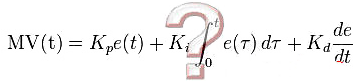
The truth is you don't need to understand control theory or equations like that evil looking one above to successfully tune most PID loops.
You don't need to plough through pages of dry text books trying to separate the academic theory from the practical techniques that you can actually use in the real world.
My name is Finn Peacock, I'm a Chartered Professional Engineer, and I've been in the Control System Engineering game for over 12 years...
After 12 years of costly trial and error, here’s what I discovered
- I've learnt that life is just too short to spend your days (and late-nights) tweaking PID Controllers using an infinite loop of trial and error.
- I've learnt that Ziegler Nichols is a waste of time on anything but the most textbook of processes.
- I've learnt that if you have $10,000 to spend - then there are some great software packages that really do work very well. (drop me a line if you want to know which one works best)
- I've also learned that if you ain't got $10K burning a hole in your pocket - you can still get your loops tuned beautifully - but you need to follow a very specific process.
Funnily enough I have never seen this complete PID Tuning process in any textbook or on any website. Which is a shame because these tuning rules will give you a fast, robustly tuned loop with minimum overshoot.
Do you want to see the formulas that I recommend for PID tuning?
I want to be completely up front with you here. Whilst you won't find my complete, step-by-step, paint-by-numbers approach in the textbooks, if you have the patience and can decipher the highly academic style of writing, you can dig up the formulas that I use to calculate the tuning constants.
In fact I'll even point you to their location. Just, please bear in mind that applying these formulas only makes up 10% of the Blueprint. The rest contains practical and essential steps that you need to complete before you should even begin to think about calculating tuning constants.
The formulas used are from the Integral Criteria and Lambda Tuning Method and minimize the Integral of Absolute Error (Don't worry I use plain English in the Blueprint).
You can find them in the following text books (the first one is 2000 pages, but you want to read page 422!):
The technique I'm talking about is a technique that I've assembled from lots of different sources over my 12 years as a control engineer working with some of the best Control Engineers in the world. I've used the very same technique to tune loops from nuclear power plants to chocolate factories.
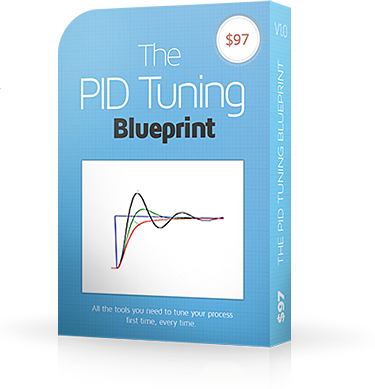
Finally, I've found time to sit down and commit every last detail of this proven method into one easy-to-use reference. I've called it:
Proven to tune
- Temperature Control
- Flow Control
- Pressure Control
- Level Control
- pH Control
- Speed Control
- Servo Control
- Cascade loops
plus many more
I have collected 12 years' worth of practical PID tuning experience and put it into The PID Tuning Blueprint. I will guide you through all the methods, principles, and hard earned practical insights of my 12 year-long journey in plain English and in a simple step-by-step way.
As a highly skilled professional, you've got a million and one things that need your attention. Don't waste your precious time trying to piece together the whole picture about PID Tuning when I can give you all the information you need right now.
What People Are Saying
"Thanks! What you are doing here is awesome. We need more folks like you in other areas of engineering training & development."
"Finn, I have just finished tuning a PID loop for an industrial refrigeration plant (ammonia) and I had to write you a quick note to say how impressed I was/am with your tuning blueprint.
I followed your steps for an integrating process and used the equations provided and WOW! what a result.
This has got to be the BEST tuning guide around. I am still yet to see a simpler way to calibrate and tune a loop. "
"Easy to use and to follow. Probably is the best down-to-earth material for tuning PIDs that I have ever seen.
Really,.. it is Idiot Proof. It is like you follow the lines painted on the floor and you will arrive safely.
Using your Blueprint, my process was tuned with just PI. PID was not necessary after it was so well tuned."
"We had a new control system installed with 3 valves with new pid loops.
We got all 3 done with your blueprint and they are all stable over the entire operating range."
"I have to say the literature that you are providing is fantastic and simplifies the whole meaning of how to control.
The book gives a very structured method to tuning loops whereas other literature maintains a complexity.
Seriously, I believe the direction you are heading and the information/instruction you have already given is second to none..."
"I have to say the literature that you are providing is fantastic and simplifies the whole meaning of how to control.
The book gives a very structured method to tuning loops whereas other literature maintains a complexity.
Seriously, I believe the direction you are heading and the information/instruction you have already given is second to none..."
"Thank you very much. This is the best thing I have ever done to improve my job performance and stay employed."
Skip the learning curve and learn from my mistakes…
Click Here to OrderHere's a sample of what the PID Tuning Blueprint will do for YOU...
Save Yourself Hundreds of Hours by Getting an Immediate Blueprint to PID Tuning Success
- Tune your loop today – the Blueprint gets straight to the point with no distractions, so you can get your process up to maximum performance ASAP
- Gives you a loop that is Robust – this means that you can rest easy safe in the knowledge that it will stay tuned for the long term
- Say goodbye to trial and error – this technique will give you the best settings first time, every time.
- This technique will automatically identify any nasty loop characteristics like time delays and lags and provide tuning constants that will handle them.
- No expensive equipment required – all you need is your process data and a spreadsheet
- Identify problems with your process that have nothing to do with the tuning (these are incredibly common)
- You Learn Techniques It Has Taken Me 12 Years to Acquire But You Can Start Using In 10 Minutes
Here's what The PID Tuning Blueprint won't do:
-
IT WON'T...
Leave you with a process that is always teetering on the edge of instability
-
IT WON'T...
Leave you with raw tuning constants and no means of converting them to the specific units and PID Algorithm of your particular controller
-
IT DOESN'T...
Expect you to have a PhD in math to understand it
-
IT WON'T...
Cost you $10,000-$30,000 in PID Tuning Software
What's In The Box?
So what does the PID Tuning Blueprint package actually include?
There are four versions of this highly capable toolkit:
1) Digital Basic Everything you need to get your process tuned today - the full course in PDF plus the PID Tuning logbook and PID Tuning Cheatsheet (all as described below). PLUS you get the 3 fast action bonuses: "The Idiot's guide to the PID Algorithm", The Definitive Guide To Cascade Control and the Process Linearizer for MS Excel.
2) Pro Package The full Blueprint in PDF with all the extras above, plus my fully featured "PID Tuning Simulator and Tuning Constants Calculator" for MS Excel.
This is PID Tuning software written in MS Excel that both hugely speeds up the tuning process and lets you learn the techniques in the blueprint on a simulation of your process. Make any beginner's mistakes in Excel - not on your plant, and be confident in your tuning before committing the new parameters to your controller.
3) Deluxe Everything I just told you about above, but all the books are shipped to you as hard copies and all the software is shipped on CD. Plus you get instant downloads of the Blueprint, bonuses and software.
4) Site Licence. A site-wide licence (up to 20 users) for your site, so that every engineer and tech can have their own copy of the blueprint materials and software including the PID Tuning Simulator / Tuning Calculator. Plus 3 hard copies of each of the books and the software on CD.
Here's each part of the package in more detail:
-
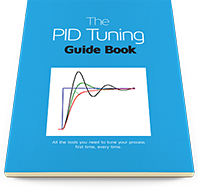
I. PID Tuning Blueprint: Guidebook
You'll get this step-by-step guide explaining my unique PID Tuning technique, and how to apply it to your specific process. Don't expect a Harry Potter novel here! It's 65 pages filled with only what you need to know, so it shouldn't take you more than an hour to work your way through. You can begin implementing the steps immediately.
-
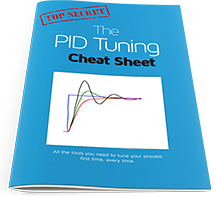
II. PID Tuning Cheat Sheet
Once you've used the Blueprint to tune your first loop, you can progress to using this 2 sided cheat-sheet to quickly tune subsequent loops. The cheat sheet is a super condensed guide to the tuning process that you can easily refer to out on the plant, to ensure that your loops get tuned as efficiently as possible.
-
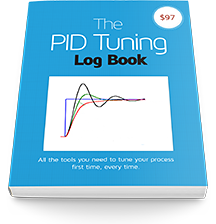
III. PID Tuning Logbook
You will be asked how you got that process working so sweetly. And if you fill in the blanks in a fresh copy of this logbook as you tune each loop, you will have a record that will show exactly what you did to improve the process -- and crucially how much you improved it by (always useful when negotiating your next rate or pay rise!)
PID Tuning Simulator and Tuning Calculator for MS Excel (Pro Package only)
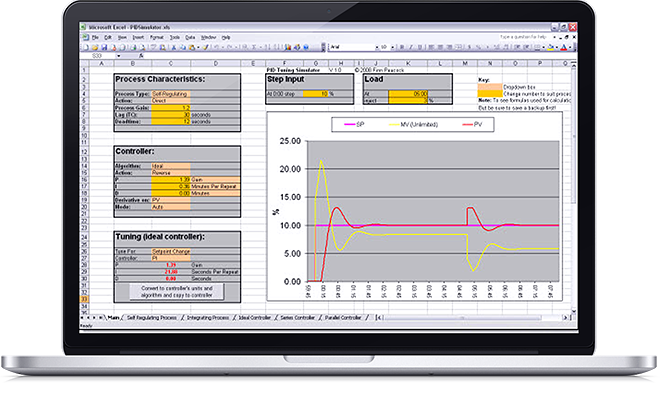
The best PID tuners in the business are those who try out their newly calculated tuning parameters on a 'fit for purpose' simulation before investing in both the effort and downtime required to implement them on their physical process.
This sophisticated spreadsheet actually simulates your process and controller right inside the familiar environment of MS Excel. Here's how it fits into your PID loop tuning process:
a) You follow steps 1-7 as per the Blueprint (despite what some software vendors may claim - these essential steps cannot be automated).
b) You go through each configurable cell on the main worksheet and dial in your process, controller and desired performance characteristics.
c) The algorithms in the spreadsheet automatically calculate your optimum tuning constants (using the exact same rules as described in the Blueprint). The spreadsheet also automates the process of converting the raw tuning constants to values that your specific controller type can use.
d) The simulator shows you how your simulated process will respond to those tuning parameters based on setpoint and/or load changes
e) You spot any mistakes in your tuning well before you touch your plant, and gain confidence in the tuning technique that you have just learned.
This is also a great learning tool for playing with the controller setup and seeing how the different parameters affect the process performance.
I have written this in Excel so that you have complete access to all the algorithms that drive the PID Simulation and the tuning. I hate 'black boxes' as much as the next engineer. If you want to understand exactly why something is happening in the simulation or the calculator - simply unprotect the sheet (no password required) and the workings are there for you to see.

PID Tuning Blueprint
I'm a little different to most PID Tuning Software/Training vendors...
I don't spend my time responding to requests for proposals, making sales visits, or flying besuited salesmen around the world sweet-talking upper management into spending lots of money...
This means that I don't have to charge 5 figures for a license. In fact you can get all the tools you need to tune your PID loop today from just:
What else does 97 bucks buy you in industrial automation in 2024?
A pack of 500 Ferrules?



"But Wait, That's Not All!"
Order now and I will give you the following FAST ACTION Bonus Package
1
FAST ACTION BONUS #1
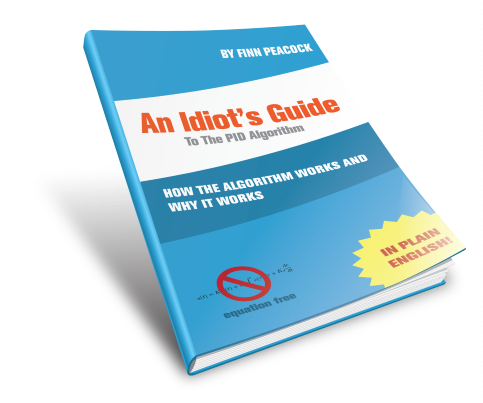
The Complete Idiot's Guide to the PID Algorithm
You don’t have to understand why the PID algorithm works or the calculus that underpins it to tune most loops in practice – but if you are like any engineer that I know – you don’t quite feel comfortable unless you have an intuitive understanding of what is happening and why…..
This guide to the PID algorithm and the mathematical concepts that underpin it - is written so that anyone can get an intuitive understanding of how the algorithm works and why.
This crash course uses the analogy of a car on a freeway changing lanes to represent the process under control and walks you through easy to visualize "thought experiments" to cement the concepts in your mind.
If Integrals, Differentials and the inner working of the PID algorithm are a mystery to you - this "Idiot's Guide" will give you the A-HA! moment as everything finally makes sense
Feedback for the Idiot's Guide
-
"As I am rather new to this field of process control, I was very pleased to have the PID Loop explained in a VERY understandable way (if you know why, the how comes easy)
Now even I can explain it to others. Excellent Job!!!"
-
"I was impressed with how the Idiot's Guide explained all of the math behind the proportional, integral and derivative terms in layman's terms, so that operators, engineers, electricians, and mechanics cold get a better understanding of PID control.
The Operators and Stationary Engineers in my plant were very grateful that I allowed them to read the Idiot's Guide, because now they could understand the processes beter.
I also liked the way that it built up each of the three components, starting with proportional, then adding integral, then finally adding derivative.
This practical explanation helped me understand PID control better in two hours than I had learned in three-month theoretical courses that I had taken in the past."
Get The Complete Idiot's Guide to the PID Algorithm today with your Order of the PID Tuning Blueprint.
Click here to Order
2
FAST ACTION BONUS #2
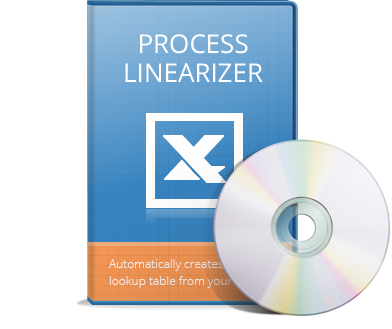
Automated Process Linearizer for MS Excel
A critical step of any tuning process is to ensure that your process responds linearly to your PID controller output (See the Blueprint Guidebook Section 8).
This Macro automates the linearizing process. You simply paste your process data in - and the macro works out a lookup table that you can use in your controller to hugely improve the performance of your loop.
Get The Definitive Guide to Cascade Control today with your Order of the PID Tuning Blueprint.
Click here to Order
3
FAST ACTION BONUS #3
Cascade Control: The Definitive Guide
You may well know that Cascade Control is one of the more popular "Advanced" PID strategies out there. You may also know that it involves inserting the output of one controller directly into the input of a second controller (ouch!).
But do you really understand why cascade control is used, when it improves loop performance and when it kills it? Would you like a detailed step-by-step guide that shows you how to evaluate, design, tune and operate a Cascade Control System?
This definitive guide to cascade control tells you everything you need to know about cascade control so you know when to use it and how to tune it. It is 25 pages of nothing but the facts with more diagrams and examples than you can shake a stick at.
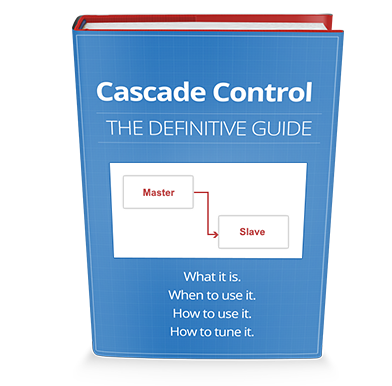
Get The Definitive Guide to Cascade Control today with your Order of the PID Tuning Blueprint.
Click here to Order
My 12 Year Education Is Yours Risk-Free
This is My Promise to You
I have a very simple promise to make to you. If the PID Tuning Blueprint is not everything I've said it is, I want you to ask for a full and complete refund.
You've got 60 days to think about it, experiment with it, learn from it, and improve your processes with it. That should give you plenty of time to know one way or the other that the Blueprint is the critical tool that boosts your process control success.
If you don't like it, or it doesn't work at least as well as I've described, you get your money back.
Simple as that.
Guaranteed.
My 60 Day Unconditional Money Back Guarantee
I am so confident that this package will make you a PID Tuning Ninja that I am offering a 60 day 100% Satisfaction Guarantee.
If you are not satisfied with it in any way whatsoever (even if you don’t like the color of the cover!) just shoot me an email within 60 days and let me know. I will issue a prompt and courteous refund. No hassles, no questions, no ifs and buts.
That’s a promise.
The investment to own the PID Tuning Blueprint starts at just $97
Finn Peacock
Author of The PID Tuning Blueprint
Questions? Call 24 hours a day - 7 days a week
US(217) 408-4452 AUS 0434 284 495Delivery
The product will be delivered to you via download once your payment has been authorized.
Format Of The PID Tuning Blueprint
NOTE: You will need Acrobat Reader to view The PID Tuning Blueprint which you will receive in PDF format. If you don't have the Acrobat Reader software you can download it for free by clicking here (a new window will open so you don't lose this page). The PID Tuning logbook is presented in MS Word, so you can fill it in electronically and also modify it to suit your company's documentation style. The PID Simulator/Calculator and Bonus Linearizer Macro need MS Excel 2003 or higher.
Finn Peacock
Author of The PID Tuning Blueprint


DISCLAIMER : Use this, or any product, at your own risk. By using this product, you agree that your recourse for any and all claims related to your use of this product is a refund within the terms of our guarantee.
The Practical PID Tuning Method for Flow, Level, pH, Pressure, Temperature, Servo, Speed, Position, Cascade Control plus many other PID Loops.